




Clarity for
global capital.

The Peregrine Group operates at the intersection of global property, data, and capital — connecting luxury real estate, commercial opportunity, and institutional-grade intelligence within a single ecosystem.

50 Global Markets · Active Intelligence
Global Capital Intelligence
$2.4T+
Assets Tracked
127
Global Markets
450+
Institutional Clients
12M+
Live Data Points
Connect Live US Data: Add your free RentCast API key to load luxury listings from Miami, Beverly Hills, Aspen & more. Free at rentcast.io/api.
Loading European luxury collection...
All Properties 0
🌎 Americas 0
🏔 Europe & Ski 0
🌏 Asia-Pacific 0
🏝 Tropics & Islands 0
Americas Collection
Europe & Ski Resorts
Europe & Ski
Asia-Pacific & Middle East
Tropics & Island Escapes
Tropics & Islands

Peregrine Intelligence delivers the data, context, and analytical depth required to evaluate opportunity, manage risk, and allocate capital with precision across borders.

Comprehensive Market Intelligence
Structured, real-time visibility across global residential and commercial markets — standardized, comparable, and continuously updated.
Advanced Analytical Frameworks
Institutional-grade tools for evaluating pricing trends, rental yield, and portfolio performance across geographies and asset classes.
Global Market Coverage
Integrated data across the United States, Europe, Asia-Pacific, and select emerging markets, providing a unified view of global property.
Portfolio Overview
$847.2M
YTD Return
+12.4%
Manhattan Core
$342.1M
+8.2%
London Prime
$289.5M
+14.7%
Singapore CBD
$215.6M
+9.1%

Institutional Access

INTELLIGENCE
Professional
Contact Us
For individual investors and analysts
Full property search across the US and Europe, market analytics, and investment calculators — designed for the self-directed investor.
  • Global luxury property search
  • Currency conversion & comparison
  • Basic market analytics dashboard
  • Property alerts & saved searches
  • Email support
Enterprise
Contact Us
For large organizations
Custom data feeds, raw API access, white-label deployments, and bespoke research capabilities built around your organization's specific requirements.
  • Everything in Institutional
  • Raw data API access
  • Custom reporting dashboards
  • White-label deployment options
  • Dedicated relationship manager
Peregrine Intelligence
GLOBAL REAL ESTATE INTELLIGENCE PLATFORM

Built for investors who see
beyond borders

The world's finest properties don't live on a single portal. Peregrine Intelligence aggregates, normalizes, and enriches luxury listings from the United States and across Europe — delivering institutional-grade property intelligence to private investors, family offices, and high-net-worth individuals seeking global opportunity.

Every listing is verified for freshness, translated for clarity, and enriched with market context. No paid placements. No noise. Just signal.

$2M+
Minimum Listing Value
20+
Countries Covered
Live
US Data via RentCast
Zero
Paid Placements
peregrineintel.net
© 2026 Peregrine Intelligence · All rights reserved
🖥

Desktop Required

Peregrine Terminal is optimized for desktop use. Please access from a laptop or desktop for the full experience.

Peregrine Intelligence
--:--:-- ET
LOADINGMarket Data...
← Main Site
PRGRN>
F1:HELP F3:SCREEN F8:INDEX F9:MACRO F10:NEWS
F1OVERVIEW
F2REIT INDEX
F3SCREENER
F4SECURITY
F5CHARTS
F6SECTORS
F7DEBT/CAP
F8RE INDEX
F9MACRO/ECON
F10NEWS
F11PORTFOLIO
F12GLOBAL RE
REIT Watchlist
Loading...
RE ETFs
Loading...
Indices
Loading...
OVERVIEW
REIT TABLE
SCREENER
SECURITY
CHARTS
SECTORS
DEBT/CAP
RE INDEX
MACRO
NEWS
PORTFOLIO
GLOBAL RE
Real Estate Intelligence — Market Overview
Live data via Yahoo Finance & FRED · Updating...
VNQ (US REIT ETF)
Loading...
IYR (RE ETF)
Loading...
10Y Treasury
Key cap rate driver
30Y Mortgage
FRED weekly avg
Simon Prop (SPG)
Retail REIT
Prologis (PLD)
Industrial REIT
Equinix (EQIX)
Data Center REIT
CPI YoY
Rent inflation driver
REIT SECTOR PERFORMANCE — YTD COMPARISON
Top REIT Movers Today
TICKERNAMEPRICECHGCHG%VOLUMEMKT CAPSECTOR
Fetching live data...
REIT Universe — Full Coverage
US-listed REITs by sector · Click row to load detail
TICKER ↕NAMESECTOR PRICE ↕ CHG% ↕ DIV YIELD ↕ MKT CAP ↕ P/FFO ↕ 52W RANGE
Loading REIT universe...
REIT Screener
Filter by financial criteria
SECTOR:
MIN YIELD:
MIN MCAP:
PERF:
TICKERNAMESECTORPRICECHG%DIV YIELDMKT CAPP/FFOSCORE
Set filters and click RUN SCREEN
SECURITY DETAIL
Type a ticker in the command bar above and press Enter
e.g. SPG · PLD · VNO · EQR · O · AMT
Macro & Economic Data — Real Estate Drivers
Federal Reserve (FRED) · Live data
Loading FRED data...
Real Estate News & Market Intelligence
Curated headlines · Global commercial property · REITs
REIT Price Charts
Type a ticker below to load chart, or click any REIT in the table
TICKER: Quick: ${['PLD','SPG','EQIX','AMT','O','WELL','EQR','PSA'].map(t=>``).join('')}
Enter a ticker above to load a price chart.
REIT Sector Analysis
Sector performance, yield averages, and key metrics
Loading sector data...
REIT Debt & Capital Structure
Leverage, coverage, and capital metrics by sector
Avg Debt/EBITDA (REITs)
5.8x
Industry benchmark
Avg Interest Coverage
3.2x
EBITDA / Interest
Avg Loan-to-Value
41%
CRE sector avg
SECTORDEBT/EBITDAINT COVLTVAVG SPREADRISK
Data Center6.1x3.8x38%+145bpsLOW
Industrial4.9x4.2x33%+130bpsLOW
Residential5.4x3.6x40%+155bpsLOW
Healthcare5.8x3.1x42%+170bpsMODERATE
Retail6.2x2.9x48%+195bpsMODERATE
Cell Tower7.1x2.6x52%+165bpsMODERATE
Office8.4x2.1x58%+280bpsHIGH
Hotel7.8x2.3x55%+260bpsHIGH
Real Estate Index & Benchmark Data
Major REIT indices and performance benchmarks
VNQ
Vanguard RE ETF
IYR
iShares RE ETF
XLRE
SPDR RE Select
REM
Mortgage REIT ETF
INDEX / ETFPRICECHG%FOCUSAUM EST
Portfolio Tracker
Track REIT positions — add tickers and quantities
Portfolio Value
$—
Today's P&L
Positions
0
TICKERQTYPRICEVALUEDAY CHGSECTOR
Add positions above to start tracking.
Global Real Estate Markets
International REIT indices & market benchmarks
US (VNQ)
Vanguard US REIT ETF
Europe (IEUR)
iShares Core MSCI EU
Asia-Pac (AAXJ)
iShares MSCI Asia ex-JP
Global RE (REET)
iShares Global REIT
EM RE (VNQI)
Vanguard Global ex-US
UK (IUKP)
iShares UK Property
GLOBAL REIT COMPARISON — RELATIVE PERFORMANCE
REGIONINDEX/ETFYTD%1Y%DIV YIELDP/NAVSTATUS
NORTH AMERICAVNQ / IYR / ICF+4.2%+8.1%3.8%0.94xNEUTRAL/POS
EUROPEIPRP / EPRA-1.8%-3.2%4.1%0.82xCAUTIOUS
ASIA-PACAAXJ / 3010.HK+2.9%+5.4%3.2%0.88xPOSITIVE
LATAMEWZ RE / FIIs-4.1%-8.9%6.8%0.71xNEGATIVE
MIDDLE EASTEMAAR / DLD+11.2%+19.4%2.9%1.12xSTRONG
Rate Environment → MACRO
Fed Funds Rate
10Y Treasury
30Y Mortgage
Cap Rate (Avg)~6.2%
SOFR
REIT Sector PerformanceTODAY
Mini Chart — VNQ30D
Economic CalendarTHIS WEEK
MONBuilding Permits
TUECPI Release
WEDMBA Mortgage Apps
THUJobless Claims
FRIFOMC Minutes
Data: Yahoo Finance · FRED API Loading market data...
PEREGRINE INTELLIGENCE TERMINAL v2.0 peregrineintel.net
Global Property · Capital · Intelligence
The Peregrine Review
Monday, March 23, 2026
All Luxury Architecture Investment Markets
This Week's Analysis 9 Stories
Tbilisi, Porto, and the New Geography of European Ambition
Emerging Markets

Tbilisi, Porto, and the New Geography of European Ambition

A generation of internationally mobile capital is bypassing London, Paris, and Zurich for a set of cities that, five years ago, rarely appeared in the same sentence as investment-grade real estate. The common thread is not geography — it is arbitrage.

James Holloway · March 22, 2026
The End of the Open Plan: Interior Architecture Turns Inward
Architecture & Design

The End of the Open Plan: Interior Architecture Turns Inward

The open-plan living space — that great democratizing innovation of late-twentieth-century residential design — is being quietly dismantled by the architects who once championed it. In its place: a renewed interest in rooms with walls, doors that close, and spaces that carry specific, deliberate purpose.

Serena Fontaine · March 21, 2026
Lake Geneva's Final Frontier: The Last Private Lakeshore Estates
Waterfront Property

Lake Geneva's Final Frontier: The Last Private Lakeshore Estates

There are perhaps two hundred meters of private Lake Geneva waterfront that could conceivably come to market in the next decade. The buyers who understand this are not waiting to be impressed — they are waiting for a call.

Philippe Moreau · March 20, 2026
Further Reading
The Office Is Not Dead. It Has Been Redesigned.
Commercial RE

The Office Is Not Dead. It Has Been Redesigned.

Five years after every prognosticator declared the end of the office, occupancy rates in a specific tier of commercial real estate are reaching decade highs. The category that is dying is not the office — it is the mediocre office.

Thomas Langford · March 19, 2026
After the Airbnb Boom: The Economics of High-Yield Hospitality Real Estate
Short-Term Rental

After the Airbnb Boom: The Economics of High-Yield Hospitality Real Estate

The era of the amateur Airbnb host capturing outsized yield from mediocre product is closing. In its place: a professionalized short-term rental industry with institutional capital, design-forward product, and a yield structure that is rewriting the investment case for residential real estate.

Marina Castillo · March 18, 2026
Passive House Goes Prime: When Net-Zero Became a Selling Point
Sustainable Design

Passive House Goes Prime: When Net-Zero Became a Selling Point

For most of its history, the Passive House standard was a technical achievement admired by architects and largely irrelevant to the market. In the past three years, it has become a premium selling point in markets from Scandinavia to California, commanding price premiums of 8% to 22% over comparable conventional stock.

Elena Vasquez · March 17, 2026
The Patient Capital of Palazzo Restoration: Italy's Most Demanding Asset Class
Historic Restoration

The Patient Capital of Palazzo Restoration: Italy's Most Demanding Asset Class

The restoration of a historic Italian palazzo is among the most demanding capital deployments in residential real estate. It is also, for those who complete it with integrity, among the most durable stores of value in any asset class.

Isabella Romano · March 16, 2026
From Trophy to Treasury: The Institutionalization of Residential Real Estate
Investment Strategy

From Trophy to Treasury: The Institutionalization of Residential Real Estate

For most of the twentieth century, residential real estate was the domain of individuals and families. Institutions — pension funds, endowments, sovereign wealth funds — were largely absent. That absence is now, decisively, ending.

David Cartwright · March 15, 2026
The 15-Minute City Is Here. The Question Is Who Gets to Live In It.
Lifestyle & Culture

The 15-Minute City Is Here. The Question Is Who Gets to Live In It.

The 15-minute city concept — the idea that daily life should be manageable within a 15-minute walk or cycle — has become the dominant framework for urban planning discussion worldwide. It has also, almost incidentally, generated a significant real estate premium.

Caitlin Ashworth · March 14, 2026
Luxury Trends

The New Amenity Arms Race: How Ultra-Prime Buyers Redefined Essential

The New Amenity Arms Race: How Ultra-Prime Buyers Redefined <em>Essential</em>

A residence in the Algarve exemplifies the new standard: understated exterior, extraordinary interior infrastructure.

When a $40 million villa in Palm Beach recently sold not because of its oceanfront position, but because of its hospital-grade air filtration and server room, brokers understood that the luxury market had quietly crossed a threshold.

For decades, the grammar of luxury real estate was legible and largely consistent: square footage, provenance, views, finishes. A penthouse was desirable because it sat above the city; an estate commanded a premium because its acreage conveyed a kind of territorial authority. The categories were understood.

A New Infrastructure of Living

That grammar is now undergoing its most significant revision in a generation. The ultra-prime buyer — loosely defined as individuals operating in the $20 million-and-above tier — has begun to demand a class of amenities so technically sophisticated, so operationally intensive, that they function less like residential features and more like institutional infrastructure.

Consider what is now becoming standard in the $30 million-plus tier: dedicated fiber redundancy with failover capability, electromagnetic shielding for privacy-sensitive rooms, climate chambers calibrated to museum-grade humidity and temperature control, and medical-grade air purification systems that would not look out of place in a cleanroom. One brokerage in New York reported that three separate buyers in the past eighteen months specified independent generator systems capable of sustaining full-home operation for 72 hours as a non-negotiable requirement.

"The buyer I'm working with now has one question before anything else: what's the backup? Power, water, internet. If the answer isn't immediately impressive, we move on." — A senior broker at a top New York firm

The Post-Pandemic Permanent Shift

The origins of this shift are not difficult to trace. The years 2020 through 2022 functioned as an extended stress test of residential infrastructure, and the wealthiest households — many of whom were sustaining entire professional operations from their homes — discovered, often uncomfortably, the gaps between what their properties offered and what modern life actually required.

Market data point: According to analysis from Knight Frank's Wealth Report, enquiries for properties with dedicated home office infrastructure and backup power systems increased 340% between 2019 and 2024 among buyers in the $10M+ tier. Wellness installations — infrared saunas, cryotherapy chambers, private medical bays — now appear in 28% of all super-prime listings globally, up from 4% in 2018.

What distinguishes the current wave from earlier wellness-trend cycles is its permanence. These are not optional upgrades that sellers add to differentiate a listing; they are becoming qualifying criteria — the minimum technical specification that a serious property must meet to be considered at all by a certain class of buyer.

The Architecture Follows the Requirement

The implications for architectural design are significant. Where once a luxury home's mechanical systems were designed to be invisible — the pipes and wires of modernity concealed behind plaster and oak — they are now, in some properties, becoming the focus of serious architectural consideration. A new residence on the Côte d'Azur recently commissioned by a technology executive devoted an entire floor — approximately 2,200 square feet — to technical infrastructure. The mechanical room is finished in polished concrete and aircraft-grade aluminum. The builder described it, without irony, as "the most important room in the house."

What this ultimately signals is a maturing of the luxury residential category — a movement from the symbolic to the functional, from the aspirational to the operational. The amenity arms race is, at its core, about buyers who have enough wealth to define the terms of their own living environment completely, and who have decided that those terms are increasingly technical, increasingly self-sufficient, and increasingly serious.

Emerging Markets

Tbilisi, Porto, and the New Geography of European Ambition

Tbilisi, Porto, and the New Geography of European Ambition

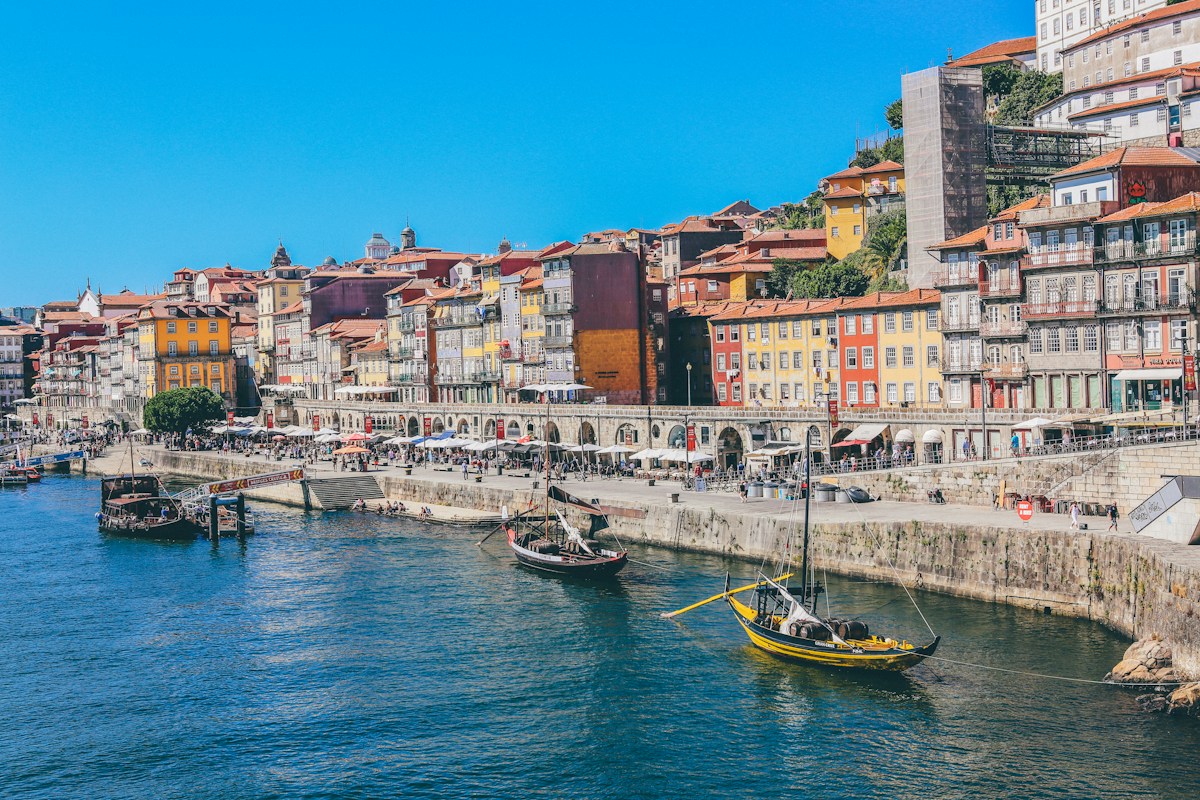
Porto's Ribeira district has become one of Europe's most coveted residential corridors.

A generation of internationally mobile capital is bypassing London, Paris, and Zurich for a set of cities that, five years ago, rarely appeared in the same sentence as investment-grade real estate.

Porto's Ribeira district, on a foggy Tuesday morning, resembles nothing so much as a European capital in the middle of a quiet identity negotiation. The pastel facades and azulejo tiles remain; the residents, increasingly, do not. In their place: a new demographic of buyer, typically northern European or American, typically working in finance or technology, typically paying prices that would have seemed implausible in 2019.

The Arbitrage Opportunity

What Porto, Tbilisi, Tallinn, and a handful of other second-tier European cities share is not architectural heritage or culinary culture, though they possess both. It is a specific kind of value dislocation — a gap between the quality of life they offer and the price at which that life can be purchased. In a world of increasingly efficient capital markets, genuine inefficiency in residential real estate is rare and consequential.

In Porto, a renovated palace apartment in the historic center — the kind of property that in Lisbon would command €2.5 million — can still be acquired for under €900,000. In Tbilisi's Vera district, a prewar apartment with original parquet floors and three-meter ceilings lists at a fraction of the per-square-meter rates of comparable property in Warsaw or Riga. The arithmetic is not subtle.

Price comparison, Q1 2026: Prime city-center renovated apartments — Porto: €4,200/sqm · Lisbon: €8,900/sqm · Madrid: €7,100/sqm · Paris: €15,400/sqm. Source: Savills European Residential Intelligence.

The Infrastructure of Arrival

What distinguishes this wave of buyer interest from earlier speculative cycles is the supporting infrastructure that has formed around it. Porto now has three dedicated concierge real estate firms serving international buyers exclusively. Tbilisi has developed an ecosystem of English-language legal practices, tax advisory firms, and property management companies specifically oriented toward foreign ownership. These are the commercial preconditions for sustainable market development, not tourist-cycle volatility.

"We're not selling a lifestyle fantasy. We're selling yield, legal clarity, and an exit strategy. The buyers who come to us have already done the spreadsheet." — A Tbilisi-based investment property broker

The risks, of course, are real. Regulatory environments in emerging markets can shift with political cycles. Currency exposure is material for non-eurozone cities. And liquidity — the ease with which a property can be sold when the cycle turns — remains thinner than in established markets.

But for a specific class of sophisticated buyer — those with genuine appetite for complexity, genuine patience for a five-to-ten year hold, and genuine skill in navigating cross-border legal structures — the mathematics of European emerging-market real estate remain, for now, unusually compelling. The window, as all arbitrage windows do, is closing. The question is how quickly.

Architecture & Design

The End of the Open Plan: Interior Architecture Turns Inward

The End of the Open Plan: Interior Architecture Turns Inward

A Zurich residence by Studio Citterio-Viel demonstrates the new privacy architecture: defined rooms, deliberate thresholds.

The open-plan living space — that great democratizing innovation of late-twentieth-century residential design — is being quietly dismantled by the architects who once championed it.

For approximately forty years, the open plan was the dominant grammar of aspirational residential design. It spoke a clear language: modernity, openness, the flow of light and social life through a unified living space. Walls were the enemy of progress. The kitchen, the dining room, the sitting area — these merged into a single spatial argument about how contemporary life was supposed to be lived.

The Architecture of Recollection

That argument, it turns out, was always partly a statement about labor and space efficiency rather than a genuine account of human preference. The open plan solved a problem — the inefficiency of the Victorian domestic layout — without particularly consulting the humans who would live inside it about what they actually needed from a home. When the pandemic arrived and the home became simultaneously a school, an office, a gym, a restaurant, and an asylum, the open plan's structural limitations became undeniable.

What has emerged in response is not a revival of Victorian compartmentalization, but something more nuanced: a new architecture of deliberate spatial definition, in which rooms are given back their specificity, thresholds are treated as meaningful events, and the acoustic privacy that walls provide is understood as an amenity in its own right.

What the Best Architects Are Building Now

The evidence is accumulating across the practices of leading residential architects. In projects by Kengo Kuma Associates, Lacaton & Vassal, and several emerging studios based in Zurich and Copenhagen, a consistent set of spatial decisions appears: libraries that are genuinely closed rooms with doors, breakfast rooms separated from kitchen operations, home offices with acoustic insulation that meets studio standards.

"A room is a promise. When you give someone a room — a real room, with walls and a door — you're telling them that what happens in there matters, that it has a right to its own acoustic and visual privacy. The open plan, for all its brightness, was a broken promise of a different kind." — A residential architect, Oslo
Design trend data: Requests for dedicated home study/library spaces with acoustic treatment increased 280% among luxury residential commissions in 2024-2025. Requests for open-plan kitchen-living configurations declined 34% over the same period. Source: RIBA Future Trends Survey.

The shift carries material implications for real estate. Properties with well-proportioned, distinctly defined rooms — the kind of Victorian and Edwardian stock that the open-plan era dismissed as cramped and old-fashioned — are recovering prestige and value. Developers who had planned wide-open loft-style layouts are reconsidering. The room, it turns out, was never obsolete. It was simply undervalued.

Waterfront Property

Lake Geneva's Final Frontier: The Last Private Lakeshore Estates

Lake Geneva's Final Frontier: The Last Private Lakeshore Estates

A Belle Époque estate on the Cologny side of Lake Geneva — one of perhaps thirty such properties remaining in private hands.

There are perhaps two hundred meters of private Lake Geneva waterfront that could conceivably come to market in the next decade.

The concept of scarcity is invoked so freely in luxury real estate marketing that it has been largely drained of meaning. But on Lake Geneva — specifically on the Cologny and Hermance shoreline between the Swiss city and the French border — the term retains its literal force. The supply of private waterfront is not merely constrained. It is, from a practical standpoint, complete.

The Math of Finite Supply

The total private waterfront on the Swiss shore of Lake Geneva runs to approximately 28 kilometers. Of that, roughly 85% is developed — most of it in the form of multi-unit residential buildings, hotels, and institutional landholdings. The remaining 15% consists of private estates, many of them dating to the Belle Époque period, owned by generational families, foundations, or discreet private buyers who have no intention of selling.

Transactions on this shoreline are measured not in annual volume but in per-decade frequency. In any given ten-year period, fewer than six to eight private estate properties change hands. Each transaction, accordingly, becomes an event — a quiet, carefully managed process that often never appears in public listings at all, conducted entirely through the networks of a handful of Geneva-based private banks and their family office relationships.

Transactional data, Lake Geneva prime shore (Swiss side), 2016-2025: 7 private estate transactions confirmed. Average price per transaction: CHF 38.4M. Price range: CHF 18M – CHF 84M. None publicly listed. Source: notarial records and Geneva cantonal land registry.

What Money Actually Buys

What distinguishes Lake Geneva waterfront from other ultra-prime waterfront markets — Monaco, the Côte d'Azur, the Hamptons — is the specific combination of attributes it offers. The privacy is institutional-grade, supported by Geneva's genuine culture of discretion. The geopolitical stability is real, not aspirational. The banking and legal infrastructure is genuinely world-class. And the physical beauty of the lake itself — ringed by the Alps, its surface shifting between flat steel and luminous jade — is not susceptible to diminishment by development or erosion.

"The buyers who come to us for Lake Geneva property are not comparing it to other waterfront. They're comparing it to art, to Treasury bonds, to a foundation. The question is not whether it will hold its value. The question is whether the timing is right." — A senior private banker, Geneva

For those with both the means and the patience, the strategy is uncomplicated: identify the estates most likely to come to market through inheritance or foundation dissolution, build relationships with the relevant advisors, and wait. On Lake Geneva's final frontier, time is the only currency that matters.

Commercial RE

The Office Is Not Dead. It Has Been Redesigned.

The Office Is Not Dead. It Has Been Redesigned.

A converted warehouse headquarters in Shoreditch, London — the new template for talent-attracting workspace.

Five years after every prognosticator declared the end of the office, occupancy rates in a specific tier of commercial real estate are reaching decade highs.

The narrative of office death was always, at some level, a category error. What the pandemic revealed was not that people had no desire to work in shared physical spaces, but that they had no desire to work in bad ones — the fluorescent-lit, open-plan, hot-desked, aggressively efficient non-environments that corporate real estate had produced over the preceding two decades.

The Two-Track Market

The commercial office market of 2026 has bifurcated sharply, in a pattern that closely mirrors the broader bifurcation of the residential market between the 1980s and 2010s. At the bottom, vacancy rates in Class B and C office stock in major cities remain stubbornly elevated — in some US markets, above 25%. At the top, Class A and A+ space in the best locations, buildings with genuine architectural quality, outdoor terraces, advanced air systems, and genuine design investment, commands occupancy rates that in some cases exceed pre-pandemic peaks.

US Office market, Q4 2025: Class A+ occupancy rate (top 10% of stock by quality): 94.2%. Class A occupancy: 87.1%. Class B occupancy: 71.3%. Class C occupancy: 58.7%. Blended market vacancy (all classes): 18.4%. Source: CBRE Research.

What the Best Buildings Have In Common

The firms that have managed this transition successfully share a specific set of commitments. First, genuine architectural investment: these are not refurbished buildings, they are redesigned ones, with structural changes that prioritize natural light, material quality, and spatial variety. Second, genuine amenity — not the table tennis and beer fridges of the previous decade's tech campus aesthetic, but grown-up infrastructure: genuine restaurants, concierge services, conference facilities with real acoustic quality, terraces with real planting.

"The question our tenants ask us is not 'do you have hot desks?' It's 'will my people want to come here?' That's a fundamentally different conversation, and it requires a fundamentally different product." — A European commercial developer

Third, and perhaps most consequentially: location selectivity. The bifurcation in the office market is not purely about quality — it is about the intersection of quality and urban vibrancy. The office buildings that are succeeding are, almost without exception, embedded in or adjacent to genuinely activated neighborhoods. The stand-alone corporate campus, isolated in its own geography, is struggling precisely because the human quality of its immediate environment cannot compensate for the product's inherent limitations. The office is not dead. It has simply raised its standards.

Short-Term Rental

After the Airbnb Boom: The Economics of High-Yield Hospitality Real Estate

After the Airbnb Boom: The Economics of High-Yield Hospitality Real Estate

A high-design rental property in the Alentejo, Portugal — where yields of 8-11% have attracted institutional capital.

The era of the amateur Airbnb host capturing outsized yield from mediocre product is closing. In its place: a professionalized short-term rental industry with institutional capital.

The numbers that circulated in the early years of the platform economy — hosts in sought-after markets generating annual yields of 15%, 18%, occasionally more — were real, but they were artifacts of a specific market condition: the imbalance between growing demand for distinctive, flexible accommodation and the thin supply of genuinely well-executed short-term rental product.

The Institutionalization of STR

That imbalance has been closing steadily, and with it, the easy money. Regulatory environments in major markets have tightened substantially — Paris, Amsterdam, Barcelona, and New York have all implemented restrictions that significantly reduce the addressable universe of STR-eligible property. Simultaneously, supply has grown in the less-regulated markets that remain attractive, compressing yields from their early-cycle peaks.

What is emerging from this normalization is not the death of the STR investment thesis, but its professionalization. The operators who are generating durable yields of 8% to 12% in 2026 are not individuals renting their second homes during summer months. They are operating entities — small to mid-sized — with dedicated property management, deliberate design programs, and sophisticated revenue management systems that optimize pricing across hundreds of data points in real time.

STR investment returns, select markets, 2025 (professionally managed properties): Alentejo, Portugal: 9.4% gross yield · Puglia, Italy: 8.8% · Cotswolds, UK: 7.2% · Lake District, Norway: 8.1% · Oaxaca, Mexico: 11.3%. Source: Hostaway/Lodgify investment analysis.

Design as Revenue Driver

Perhaps the most significant finding from the data is the yield premium commanded by design quality. A short-term rental property that has been deliberately designed — with an identifiable aesthetic point of view, quality materials, considered photography, and a narrative that supports its positioning — consistently outperforms comparable properties by 35% to 55% on average daily rate, according to analysis from multiple STR management platforms.

"We spend between €40,000 and €80,000 on the design and photography of a new property before it takes a single booking. That investment typically pays back within eighteen months. After that, the yield differential compounds." — An STR operator managing 23 properties across Portugal and Spain

The implication for real estate investors is clear. The commodity STR — the competently furnished apartment in a good location — is increasingly a thin-margin product. The investment thesis of the next decade belongs to properties with genuine design distinction and operational sophistication. The asset class is maturing. The question is whether investors are willing to upgrade along with it.

Sustainable Design

Passive House Goes Prime: When Net-Zero Became a Selling Point

Passive House Goes Prime: When Net-Zero Became a Selling Point

A certified Passive House residence in the Danish countryside — zero heating bills, carbon-negative operation.

For most of its history, the Passive House standard was a technical achievement admired by architects and largely irrelevant to the market. That has changed.

The Passive House movement was founded in Germany in the early 1990s by physicist Wolfgang Feist, and for most of its first three decades it occupied an honorable but commercially marginal position in the residential landscape. Its adherents were committed; its buildings were excellent; its market penetration was, outside of Germany and Austria, negligible.

The Market Catches Up

Three forces have converged to change that calculus. First, energy prices. The volatility of European energy markets since 2022 has made the promise of near-zero heating bills — a certified Passive House's most material consumer benefit — not merely virtuous but financially significant in a way that is now legible even to buyers without particular environmental commitments. A home that requires no supplemental heating in a Nordic winter is a home with a structural cost advantage that compounds over time.

Second, regulatory momentum. Building standards across the EU, UK, and an increasing number of US states are converging toward Passive House equivalent performance requirements. The future regulatory risk in conventional construction — retrofitting requirements, carbon taxes on high-emission buildings — is real and increasingly priced into valuations by sophisticated buyers and lenders.

Certified Passive House premium, select markets, 2025: Oslo: +18% vs. equivalent conventional · Munich: +14% · London (Passivhaus certified): +22% · Portland, OR: +9% · Melbourne: +11%. Source: Passivhaus Institut / Savills research.

The Design Problem, Solved

The third force is perhaps the most consequential for the luxury market specifically: the resolution of the design problem. Early Passive House buildings were often visually uncompromising in the most literal sense — they were built to a thermal and airtightness specification that prioritized performance over aesthetics, resulting in buildings that read as technical objects rather than architectural ones.

"We spent the first fifteen years of our practice proving that a Passive House building could be beautiful. We should not have had to. But having proven it, the conversation with clients is now entirely different." — A Danish architect, Copenhagen

A generation of architects — primarily but not exclusively in Scandinavia — has now demonstrated convincingly that the Passive House standard is fully compatible with exceptional architectural quality. The result is a cohort of residential properties that are simultaneously the most technically advanced, the most energy-efficient, and the most design-sophisticated buildings being produced in their respective markets. The premium is, if anything, still catching up to what these properties actually deliver.

Historic Restoration

The Patient Capital of Palazzo Restoration: Italy's Most Demanding Asset Class

The Patient Capital of Palazzo Restoration: Italy's Most Demanding Asset Class

An 18th-century palazzo in Venice's Dorsoduro district, mid-restoration — a seven-year project by its current owners.

The restoration of a historic Italian palazzo is among the most demanding capital deployments in residential real estate — and among the most durable stores of value in any asset class.

The prospectus for palazzo restoration, were anyone to write it honestly, would be a document of unusual candor. The timeline: seven to fifteen years for a serious project. The budget overrun probability: approximately 100%. The regulatory complexity: extreme and highly variable by region. The emotional cost: significant. The financial return: uncertain, illiquid, and potentially extraordinary.

Why Anyone Does It

And yet there is a permanent, if small, community of buyers for whom palazzo restoration is not merely acceptable but genuinely sought. Their motivations are, characteristically, not purely financial — a buyer who approaches a palazzo purely as a yield investment will almost certainly be disappointed. But the motivations of those who proceed with clear eyes and sufficient capital are more varied and more coherent than a surface reading might suggest.

For some, it is preservation — a genuine belief that the physical fabric of these buildings carries irreplaceable cultural and architectural value, and that private ownership is often the most effective mechanism for securing their future. The alternative — institutional or governmental stewardship — has a mixed record on the Italian peninsula, and the buyers who understand this have reached their own conclusions about the relative merits of private accountability.

Palazzo restoration economics (indicative, Tuscany, 2024-2025): Acquisition cost of unrenovated 18th-century palazzo (10,000 sqm): €1.8M–€3.5M · Full restoration to institutional standard: €3,200–€5,800/sqm · Total all-in cost, completed: €34M–€62M · Comparable completed palazzo value: €40M–€90M. Source: Sotheby's Italy / Engel & Völkers Florence.

The Art of the Authentic Restoration

The distinction between restoration and renovation is not pedantic — it is the difference between a project that adds value and one that destroys it. A palazzo that has been "renovated" in the conventional residential sense — walls reconfigured, original plasterwork replaced with modern finish, stone floors covered with contemporary tile — has typically lost more value than the renovation cost. The market for completed palazzi is exceptionally small, exceptionally informed, and exceptionally unforgiving of inauthenticity.

"I have shown buyers around palazzi that cost €20 million to acquire and €30 million to renovate. They offer €18 million. And they're right. The renovation destroyed what the palazzo was." — A Florentine property consultant

The authentic restoration — faithful to the building's original material language, compliant with soprintendenza requirements, executed by craftspeople with genuine specialist skills — is another matter entirely. It is also rarer, slower, and more expensive than almost anyone initially calculates. But for the buyer with the patience to wait for the right building, the right team, and the right decade: there is almost nothing in residential real estate that matches it.

Investment Strategy

From Trophy to Treasury: The Institutionalization of Residential Real Estate

From Trophy to Treasury: The Institutionalization of Residential Real Estate

Institutional residential acquisition in Mayfair, London — the investment category that family offices now treat as a bond-adjacent allocation.

For most of the twentieth century, residential real estate was the domain of individuals and families. Institutions were largely absent. That absence is now ending.

The asset allocation models of major institutional investors have historically treated residential real estate as a peripheral category — useful as an inflation hedge in modest allocations, but insufficiently liquid, scalable, or professionally manageable to warrant serious capital commitment. The bond desk, the equity desk, the alternatives desk: residential was, at best, a line item in the alternatives bucket, outranked by private equity, hedge funds, and infrastructure.

The Structural Shift

That positioning is under active revision at a surprising number of major allocators. The drivers are familiar but increasingly urgent: a structurally low-yield environment across traditional fixed income, sustained inflationary pressure that real assets hedge better than financial ones, and the emergence of institutional-grade operating platforms in the residential sector that have reduced the management complexity that historically made the asset class unattractive to large-scale capital.

The numbers reflect a decisive shift in allocation. According to NCREIF data, institutional allocation to residential real estate (including multifamily, single-family rental, and senior living) has grown from 12% of total real estate allocation in 2015 to 31% in 2025. Among sovereign wealth funds specifically, the reallocation has been more dramatic still — several major funds have explicitly articulated residential as a core allocation category for the first time.

Institutional residential allocation trends, 2015-2025: Global institutional capital invested in residential RE grew from $420B to $1.7T. Single-family rental as a standalone category grew from effectively zero to $380B. PBSA (Purpose-Built Student Accommodation) reached $210B. Senior living: $290B. Source: ANREV/INREV/NCREIF Annual Survey.

The Implications for Private Buyers

The institutionalization of residential creates both headwinds and tailwinds for private buyers at different price points. At the mass-market level, institutional competition for single-family rental stock has been a genuine constraint on first-time buyer access in markets from Phoenix to Birmingham. At the super-prime level, the institutional presence has been, paradoxically, stabilizing — major sovereign wealth funds bidding for portfolios of prime London or Paris residential have established a price floor that functions as structural support for the entire market above a certain threshold.

"The family office clients I work with have watched institutional capital validate every instinct they had about residential as a serious allocation. The validation is welcome. The competition is less so." — A London-based family office advisor

What the institutionalization ultimately represents is the completion of residential real estate's transition from a personal to a professional asset class — from something people buy to live in, to something investors hold alongside equities and bonds, managed by dedicated teams, financed through sophisticated structures, and evaluated through the same frameworks as any other serious capital allocation. The house has left the neighborhood and entered the portfolio. The implications are still unfolding.

Lifestyle & Culture

The 15-Minute City Is Here. The Question Is Who Gets to Live In It.

The 15-Minute City Is Here. The Question Is Who Gets to Live In It.

Amsterdam's canal belt — one of the world's original 15-minute cities, and now one of its most expensive.

The 15-minute city concept has become the dominant framework for urban planning discussion. It has also, almost incidentally, generated a significant real estate premium.

The concept is deceptively simple: every urban resident should be able to access work, education, grocery shopping, healthcare, and leisure within a fifteen-minute walk or bicycle ride of their home. The architect and urbanist Carlos Moreno popularized the term, Paris Mayor Anne Hidalgo made it city policy, and the idea spread with unusual velocity through the planning and real estate worlds in the years following 2020.

The Premium of Walkability

What the planning discourse underemphasized, and what the real estate market has now made explicit, is the wealth dimension of the 15-minute city. The neighborhoods that most fully embody the concept — dense, mixed-use, pedestrian-friendly, rich in independent retail, cafés, parks, and cultural amenity — are, almost without exception, expensive. Not because walkability directly generates value in some mechanistic sense, but because the combination of physical qualities required to produce genuine urban walkability correlates strongly with the conditions that attract high-income residents, and high-income residents generate the commercial activity that sustains the amenity that attracts more high-income residents.

The result is a positive feedback loop that, while producing excellent neighborhoods, tends to price out the very diversity of uses and residents that made the original neighborhood attractive in the first place. The 15-minute city is real. But its current iteration is, in most markets, a premium product.

Walk Score premium analysis, US cities, 2025: Properties with Walk Score 90+ command average premium of 26.3% vs. comparable properties at Walk Score 60-70. In cities with highest overall walkability (NYC, Boston, San Francisco), premium narrows to 8-12% due to market saturation. In emerging walkable neighborhoods (Columbus, OH; Raleigh, NC), premium reaches 34-42%. Source: Redfin Research.

The Second-Tier Opportunity

For investors and buyers who understand this dynamic, the opportunity is not in the already-expensive established walkable neighborhoods but in the second-tier districts that are in the process of acquiring the preconditions for walkability. The metrics are learnable: the arrival of independent cafés (not chain coffee), the opening of a quality independent bookshop or florist, the renovation of a corner building, the installation of protected cycling infrastructure. These are the leading indicators of a neighborhood moving toward the 15-minute standard.

"I watch for the bookshop. Not the coffee shop — coffee shops are a lagging indicator. When an independent bookshop opens in a neighborhood, someone who is good at reading culture made a bet. I make mine shortly after." — A residential developer, Brooklyn

The deeper question — who the 15-minute city is actually for, and how urban policy can make its benefits accessible beyond the highest income tier — is a live political and economic debate that will shape city planning for the next generation. But for those engaged in the real estate market as it currently operates, the directional answer is clear. Walkability is a premium. The neighborhoods acquiring it are worth watching.